More than a few Visalia projects run into trouble when the dewatering plan is based on textbook values instead of site-specific measurements. We see it in the older alluvial fans east of downtown: pumps sized wrong, excavations flooding, and contractors scrambling. The test pits crew hits water at six feet, and suddenly everyone wants to know the real infiltration rate. A field permeability test answers that. We run Lefranc in granular soils below the water table and Lugeon in the fractured metamorphic rock that crops up toward the Sierra foothills. The data goes straight into the groundwater control design. For deep foundation work, pairing this with an SPT drilling program gives you both stratigraphy and hydraulic conductivity in one mobilization. That is how you avoid a soggy mess on the jobsite.
A single Lefranc test in Visalia’s stratified alluvium is worth more than ten Hazen estimates from grain-size curves when designing a dewatering system.
Scope of work in Visalia
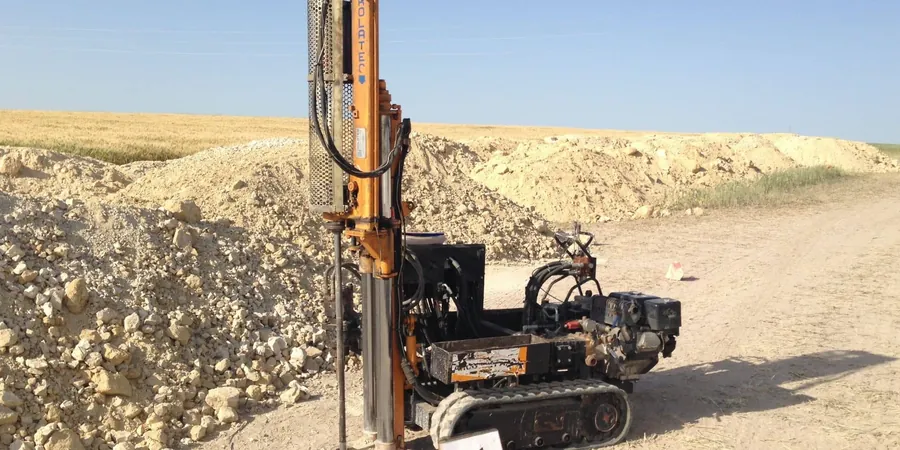
Local geotechnical conditions in Visalia
A medical office building on Walnut Avenue had a basement level designed with a conventional sump pump array. The geotech report estimated permeability at 1x10^-4 cm/s based on grain-size correlations. During construction, inflows overwhelmed the system within hours. We mobilized and ran three Lefranc tests at the excavation subgrade. The actual hydraulic conductivity measured 4x10^-3 cm/s—forty times higher. The alluvial gravel lenses, common in the old Kaweah River paleochannels that cross Visalia, were acting as underground drains. The fix required a full perimeter wellpoint system and a redesign of the slab drainage layer. No one was happy about the change order. A single day of field permeability testing during the investigation phase would have caught it. When infiltration rates or cutoff wall effectiveness are on the line, correlation-based estimates are just educated guesses.
Our services
Our Visalia field testing program covers the two primary in-situ methods, supported by our ISO 17025-accredited laboratory for any companion soil classification needs.
Lefranc Variable Head Test
Performed in boreholes through alluvial sands and silts typical of the Visalia area. We measure the rate of water level recovery after a sudden change, calculating the coefficient of permeability using the Hvorslev or Bouwer-Rice method. Ideal for dewatering system design and groundwater control plans.
Lugeon Constant Pressure Test
Five-stage packer test in fractured granitic and metamorphic bedrock encountered beneath the alluvial cover toward the Sierra Nevada foothills. We record water take at increasing and decreasing pressure steps, plotting the flow-pressure curve to assess fracture dilation, washout, or clogging behavior.
Top questions
How much does a field permeability test cost in Visalia?
For a Lefranc or Lugeon test program in the Visalia area, budget between US$720 and US$970 per test location, assuming the borehole is already drilled and prepared. The exact cost depends on access conditions, depth of the test interval, and whether we are running a single test or a vertical profile at multiple depths.
When do I need a Lugeon test instead of a Lefranc test?
You need a Lugeon test when the subsurface investigation encounters rock—typically the fractured granitic and metamorphic bedrock that underlies Visalia’s alluvial cover at depth, especially near the eastern side of the city. The Lugeon method quantifies the hydraulic conductivity of rock discontinuities under pressure, which is critical for dam foundations, tunnel alignment studies, and cutoff wall design.
How many test locations do you recommend for a typical Visalia commercial building site?
For a standard commercial lot under one acre with a single proposed building footprint, we typically recommend a minimum of two to three test locations distributed across the site. In Visalia’s alluvial setting, where lenses of sand and gravel can create preferential flow paths, this spacing helps capture lateral variability. If the water table is shallow or the project includes a basement, we add at least one more test at the proposed excavation depth.