ASCE 7 and the California Building Code aren't just paperwork here — Visalia sits on deep alluvial deposits from the Kaweah River and the Sierra Nevada, with groundwater often found within 10 to 20 feet of the surface. That combination means shallow footings aren't always an option, especially for commercial and industrial projects east of the 99 toward the foothills. We've designed pile foundations across Tulare County for everything from agricultural processing facilities to public works structures, and the geology here consistently demands a deep foundation approach when bearing capacity drops off in the upper 10 feet. Before committing to a pile layout, we typically correlate site data with CPT testing to get a continuous profile of the silty sand and clay layers that dominate the area.
In Visalia, ignoring the liquefaction potential of the upper alluvium is the single most expensive mistake you can make in pile foundation design.
Scope of work in Visalia
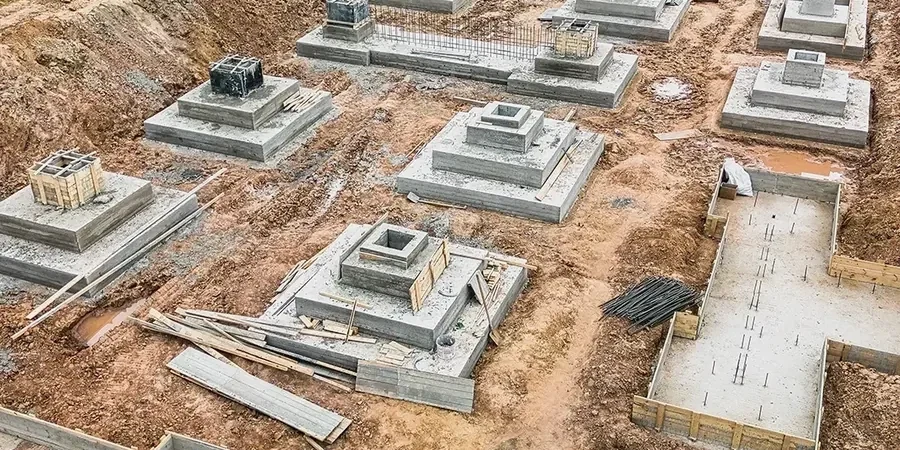
Local geotechnical conditions in Visalia
The most common misstep we see with contractors and smaller engineering firms in the Visalia area is assuming a uniform bearing layer across the entire site without verifying it through borings or soundings. You might hit dense gravel at 40 feet on one corner of the lot and still be in loose silty sand at 60 feet on the opposite corner — that differential can produce uneven pile settlement and cracking in the superstructure within the first five years. Another frequent issue is underestimating the lateral loads from seismic events when piles are embedded in potentially liquefiable material; the loss of lateral support during shaking can buckle slender piles that weren't designed with adequate confinement or ductility. We've also encountered projects where the pile cap was designed without accounting for the seasonal high water table, leading to buoyancy and uplift problems during wet winters.
Our services
Our pile foundation scope in Visalia extends beyond the design calculations — we coordinate the subsurface investigation, interpret the geotechnical parameters, and deliver a foundation package ready for the structural engineer and the contractor on site.
Deep Foundation Analysis & Pile Design
Axial and lateral capacity calculations for driven piles and drilled shafts based on site-specific CPT and SPT data, including group efficiency, settlement under service loads, and downdrag evaluation for expansive or consolidating soils.
Pile Load Testing & Construction Oversight
High-strain dynamic testing setup and interpretation, static load test specification, and field observation during pile installation to verify refusal criteria and compliance with the project's foundation report.
Top questions
How deep do piles typically need to go in Visalia?
It depends entirely on the site, but in our track record across Visalia, pile tips usually end up between 40 and 80 feet deep. The target is a dense sand or gravel layer below the softer alluvial silts and clays that dominate the upper profile. East of town toward the Sierra foothills you might hit refusal shallower; west of Highway 99 the depth tends to increase. We confirm the bearing stratum through borings or CPT soundings before finalizing the pile length.
What type of pile works best in Visalia's soil conditions?
Driven precast concrete piles and H-piles are the most common choices here. They handle the silty sand matrix well and can be driven to the required depth without the hole stability issues you'd face with drilled shafts when groundwater is high. That said, we do specify drilled shafts when vibration from driving is a concern near sensitive equipment or historic buildings in the downtown area.
What is the cost range for pile foundation design in Visalia?
A complete pile foundation design package for a typical commercial project in Visalia generally falls between US$1,440 and US$5,670, depending on the number of borings, the complexity of the load case, and whether dynamic testing or static load tests are included. Smaller residential projects with limited scope can sometimes fall on the lower end of that range.
Do I need a liquefaction study along with the pile design?
In many parts of Visalia, yes. The younger alluvial deposits near the Kaweah River and St. Johns River corridors have silty sand layers that can liquefy under seismic loading. The building code requires a liquefaction assessment for Site Class D or E conditions, and that analysis directly feeds into the lateral load and buckling checks for the piles.
How long does the pile design process take?
From the completion of the field investigation to the delivery of the final foundation report, you're typically looking at three to four weeks. The timeline depends on lab testing turnaround for soil classification and strength parameters, plus the engineering analysis for axial and lateral capacity under the project's specific load combination.