Geotechnical laboratory testing forms the backbone of responsible site development and infrastructure design in Visalia, California. This category encompasses the physical and mechanical evaluation of soil and rock samples to determine their engineering properties, including strength, compressibility, permeability, and classification. In a region where alluvial deposits from the Kaweah River and surrounding Sierra Nevada foothills create highly variable subsurface conditions, laboratory analysis is not merely a regulatory checkbox but a fundamental necessity. By subjecting undisturbed and remolded samples to controlled testing environments, engineers can predict how the ground will behave under structural loads, seismic shaking, and seasonal moisture fluctuations. The data generated here feeds directly into foundation design, slope stability models, pavement thickness calculations, and earthwork specifications, making it indispensable for any project that interacts with the ground.
Visalia sits at the eastern edge of the San Joaquin Valley, a deep structural trough filled with thousands of feet of sediments eroded from the Sierra Nevada. Near-surface soils typically consist of interbedded sands, silts, and clays deposited by the Kaweah River and its distributaries. This geologic setting produces soils that can range from clean, well-draining alluvial sands near the St. Johns River to highly plastic, expansive clays in the older basin deposits to the west. Expansive clay behavior is a well-documented hazard throughout the valley, causing foundation heave and cracking during wet winters and shrinkage during dry summers. Laboratory tests such as the Atterberg limits determination quantify a soil's liquid limit, plastic limit, and plasticity index, directly assessing its expansive potential and suitability as a structural fill or foundation subgrade. Without this data, designs would rely on assumptions that frequently prove costly in Visalia's climate.
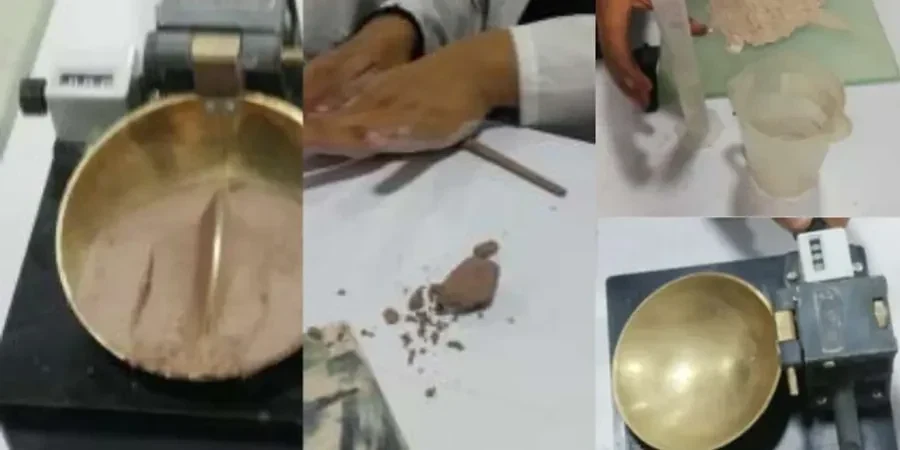
Laboratory testing protocols in the United States must conform to standards established by ASTM International, with additional oversight from Caltrans specifications for public works projects in California. The California Building Code (CBC) references these standards for foundation design, requiring site-specific soil investigations that include laboratory testing for critical structures. For instance, ASTM D4318 governs the Atterberg limits test, while a complete particle size distribution obtained through a combined grain size analysis (sieve + hydrometer) follows ASTM D6913 and D7928. These standards ensure consistency and comparability of results across different laboratories and projects. Caltrans Standard Specifications further mandate specific testing frequencies and methods for highway and bridge projects, reflecting the state's commitment to infrastructure resilience in seismically active regions. Adherence to these protocols is essential for permit approval and liability protection.
The types of projects in Visalia that demand comprehensive laboratory testing are diverse and critical to the region's growth. Agricultural processing facilities, a cornerstone of Tulare County's economy, require thick, heavily loaded slabs that depend on accurate subgrade characterization, including compacted density and bearing capacity tests. Residential subdivisions east of downtown, expanding toward the foothills, encounter variable alluvial soils where Atterberg limits testing becomes vital for post-tensioned slab design to mitigate expansive clay risks. Municipal infrastructure such as the Visalia Municipal Airport runway expansions and stormwater detention basins rely on permeability testing and aggregate quality assessments. Even smaller commercial developments on Mooney Boulevard benefit from laboratory data to optimize foundation types and reduce over-excavation, saving time and material costs while ensuring long-term performance under the valley's hot, dry summers and occasional intense winter rains.
Top questions
Why is geotechnical laboratory testing necessary for construction projects in Visalia?
Laboratory testing quantifies soil properties that cannot be reliably estimated visually. Visalia's alluvial soils vary dramatically in strength, compressibility, and expansive potential over short distances. Testing provides the engineering parameters required by the California Building Code for foundation design, helps mitigate risks like differential settlement or slab heave, and ensures earthwork specifications meet Caltrans or local agency standards for long-term performance.
What soil conditions in Visalia make laboratory classification tests particularly important?
The San Joaquin Valley floor around Visalia contains significant deposits of high-plasticity clays that undergo substantial volume changes with moisture variation. Laboratory classification tests like Atterberg limits directly measure this expansive behavior. Additionally, interbedded sands and silts require grain size analysis to assess drainage, liquefaction potential, and suitability as structural fill, making accurate classification essential for hazard evaluation.
Which ASTM standards apply to routine soil testing for Visalia projects?
Common ASTM standards include D4318 for Atterberg limits, D6913 for sieve analysis, D7928 for hydrometer analysis, D1557 for modified Proctor compaction, and D3080 for direct shear. Caltrans projects may reference California Test Methods (CTM) which often mirror or modify ASTM procedures. The specific standards required depend on the project type and the governing agency, but all accredited laboratories in the area follow these protocols.
How long does a typical laboratory testing program take for a commercial development in Visalia?
Turnaround time depends on the test suite and laboratory workload. Basic classification tests like grain size analysis and Atterberg limits may be completed within three to five business days. Consolidation or triaxial shear tests require longer due to staged loading or saturation procedures, potentially taking one to two weeks. Expedited works are often available for time-sensitive projects, but scheduling early in the design phase is recommended.