Ground improvement in Visalia encompasses a specialized set of geotechnical engineering techniques designed to enhance the mechanical properties of soil and fill materials, ensuring they can safely support structural loads. This category is critical because much of the built environment in California's Central Valley, including Visalia, rests on alluvial soils deposited by the Kaweah River and its tributaries. These soils often lack the density and strength required for modern infrastructure, making ground improvement not just a value-added service but a fundamental necessity for mitigating risks like differential settlement, liquefaction during seismic events, and bearing capacity failure. By addressing these subsurface challenges, ground improvement ensures the longevity and safety of everything from single-family homes to large commercial warehouses and public works projects.
The local geology of Visalia is dominated by Quaternary alluvium, consisting of interbedded layers of sands, silts, and clays. These unconsolidated deposits can be highly variable, with loose, saturated sandy lenses posing a significant liquefaction hazard in an earthquake. The region's proximity to the seismically active Sierra Nevada foothills and the broader San Andreas Fault system means that seismic considerations are paramount in project design. Traditional deep foundations can bypass these problematic layers, but ground improvement methods like vibrocompaction design offer a cost-effective alternative by densifying the soil mass in place, transforming loose deposits into a competent, engineered fill that resists both static and dynamic loads.
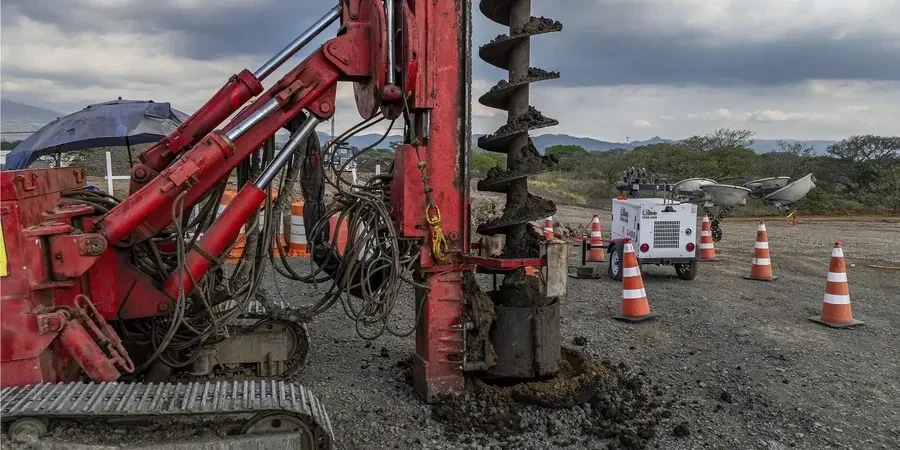
Compliance with national and local building codes is a non-negotiable aspect of ground improvement in Visalia. All designs must adhere to the International Building Code (IBC) as adopted by the State of California, specifically Chapter 18 on Soils and Foundations. More critically, the California Building Code (CBC) incorporates stringent seismic design requirements, including mandatory liquefaction assessments per ASCE 7 and site-specific ground motion analyses. For projects involving deep vibratory techniques, the specifications of the American Society of Civil Engineers (ASCE) and the Deep Foundations Institute (DFI) deliver the standard of practice. A thorough geotechnical investigation, conforming to Tulare County standards for reporting and analysis, is the prerequisite for any improvement design, providing the parameters needed to select and validate the appropriate technique.
The types of projects that require ground improvement in Visalia are diverse. Large-footprint structures like distribution centers and food processing plants, which are common in the region's agricultural economy, often cannot tolerate the total and differential settlements predicted for untreated ground. Infrastructure projects, including bridge approaches, roadway embankments, and stormwater detention basins, rely on ground improvement to prevent post-construction distress. Even low-rise residential subdivisions can benefit when they are situated over compressible clay layers or loose sands. For sites with significant fine-grained soils, a stone column design may be the optimal solution, installing compacted gravel columns that reinforce the ground and deliver a vertical drainage path to accelerate settlement, thereby stabilizing the soil matrix more rapidly than surcharging alone.
Available services
Top questions
What is the main purpose of ground improvement for construction in Visalia?
The primary purpose is to mitigate risks associated with the region's loose, alluvial soils, such as excessive settlement and liquefaction during earthquakes. By mechanically densifying or reinforcing the ground in place, these techniques increase soil bearing capacity and stiffness, providing a safe and stable foundation for structures without the need for costly deep foundations.
How do I know if my project site in Visalia requires ground improvement?
A site-specific geotechnical investigation is the only way to determine this. The investigation will assess soil stratigraphy, density, groundwater levels, and seismic risk. If analyses reveal excessive predicted settlement, inadequate bearing capacity, or a high liquefaction potential under the California Building Code's seismic criteria, then ground improvement will be recommended as a necessary mitigation measure.
Is ground improvement a permanent solution, or will the soil settle again over time?
When properly designed and executed, ground improvement provides a permanent engineering solution. Techniques like vibrocompaction permanently rearrange soil particles into a denser state, while stone columns create a composite ground mass that will not degrade. The design process accounts for long-term loading conditions to ensure that post-construction settlements are within tolerable limits for the structure's lifespan.
How does ground improvement in Visalia address California's strict seismic building codes?
These methods directly target the soil failures that codes are designed to prevent. For example, vibrocompaction eliminates the potential for liquefaction in loose sands by densifying them, which is a primary seismic hazard. Designs are performed in strict accordance with ASCE 7 and IBC/CBC standards, using site-specific seismic parameters to verify that the treated ground will perform as expected during the design earthquake event.