The laboratory sieve shakers and compaction molds are configured for the specific alluvial mixes found in Visalia. We process samples from across the city, from sites near the St. John's River to developments pushing east toward Yokuts Valley, where the subgrade shifts from sandy loam to clay-rich deposits. The goal with flexible pavement design is always the same: build a structural section that distributes traffic loads through the asphalt concrete, base, and subbase layers without overstressing the natural ground. In Visalia, that means running the right sequence of tests—gradation, Atterberg limits, and modified Proctor—before any pavement thickness calculations begin. The Atterberg Limits help us flag expansive fines in the subgrade that would otherwise cause premature fatigue cracking, while the CBR Test provides the bearing capacity input needed for layer coefficient determination under the 1993 AASHTO Guide.
A flexible pavement is only as reliable as the subgrade it rests on—skip the geotechnical investigation and the asphalt cracks follow the soil's weak spots.
Scope of work in Visalia
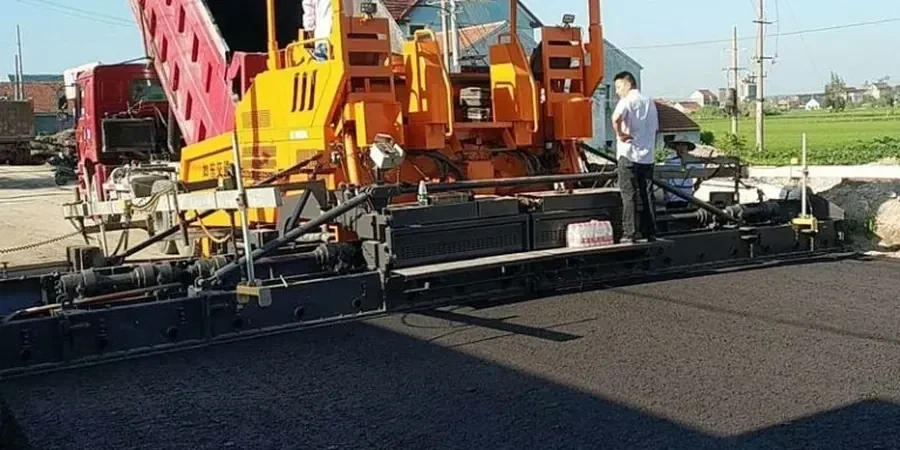
Local geotechnical conditions in Visalia
Visalia's growth from a 19th-century agricultural stop along the Southern Pacific Railroad to a city of over 140,000 has pushed pavement infrastructure onto soils that were never intended to carry heavy axle loads. The expansion east of Lovers Lane, where former orchard land was graded for subdivisions, left behind pockets of uncompacted fill and buried irrigation pipes that create differential settlement under flexible pavements. When a pavement section is designed without accounting for these subsurface anomalies, the result shows up within three to five years: longitudinal cracking aligned with old trench lines, alligator cracking in wheel paths, and localized depressions where the base course has pumped into the subgrade. We see this pattern repeatedly in Visalia's older commercial corridors. The solution starts with a rigorous subgrade investigation that includes Test Pits to expose the actual layering beneath the proposed alignment, allowing us to identify problem zones before the first ton of aggregate is placed.
Our services
Our pavement design workflow in Visalia covers the full sequence from field sampling to final layer thickness recommendations. Each service targets a specific failure mechanism common to the Central Valley.
Subgrade Characterization and CBR Testing
Field sampling with thin-wall Shelby tubes and bulk bags, followed by laboratory CBR (ASTM D1883) at the target moisture and density conditions. We deliver both soaked and unsoaked CBR values to account for Visalia's winter groundwater conditions.
Pavement Structural Design per AASHTO 1993
Layer thickness calculations using the AASHTO empirical method with inputs for design ESALs, reliability level (typically 85–95% for urban arterials), serviceability loss (ΔPSI), and effective roadbed resilient modulus. We deliver a complete SN-based build-up.
Base and Subbase Quality Control
Laboratory compaction testing (ASTM D1557) and sieve analysis (ASTM D6913) on aggregate base and subbase materials sourced from local Visalia quarries. We verify gradation envelopes meet Caltrans Class 2 or Class 3 specifications before placement.
Top questions
What is the typical flexible pavement section for a residential street in Visalia?
For a low-volume residential street with design ESALs below 10^5, a typical Visalia section consists of 3 inches of Type A HMA over 6 inches of Class 2 aggregate base. This assumes a subgrade with a soaked CBR of at least 5%. If the subgrade CBR falls below 3%, we add 4 to 6 inches of Class 3 subbase or stabilize the upper 12 inches with cement treatment.
How much does a flexible pavement design study cost for a Visalia project?
A complete flexible pavement design package—including field sampling, laboratory CBR and compaction testing, and the AASHTO structural design report—ranges from US$1,430 to US$5,360 depending on the number of borings, the linear footage of the alignment, and whether additional tests like resilient modulus or R-value are required by the City of Visalia Public Works Department.
Why does flexible pavement in Visalia crack prematurely compared to other cities?
Premature cracking in Visalia is frequently tied to expansive clay subgrades that shrink during the hot dry summers and swell when winter moisture returns. This seasonal volume change creates tensile stresses in the asphalt layer that exceed its fatigue limit. A proper geotechnical investigation identifies these clays early, and the pavement design compensates with a thicker aggregate base or a lime-stabilized subgrade layer.
What is the difference between the AASHTO 1993 method and the MEPDG for Visalia pavements?
The AASHTO 1993 method remains the standard for most Visalia municipal and Caltrans projects because of its simplicity and long calibration history with local materials. The Mechanistic-Empirical Pavement Design Guide (MEPDG) requires detailed climate data, traffic spectra, and material properties such as dynamic modulus. We apply MEPDG on projects with high traffic volumes—such as SR 198 widening—where performance prediction over 20-plus years justifies the additional input effort.