Summers in Visalia hit 100°F before noon, baking the topsoil into something closer to brick than dirt. But dig down fifteen feet and you hit the real story: the Kings River has spent millennia laying down alternating bands of sand, silt, and clay across the valley floor. A deep excavation here isn't just a hole in the ground — it's an engineered interruption of a groundwater regime that sits surprisingly close to the surface for a city this far inland. We design shoring systems that account for hydrostatic pressure, layered collapse potential, and the simple fact that your neighbor's century-old walnut packing shed might be sitting on loose alluvium with no engineered fill underneath. Getting the brace spacing right before the backhoe ever arrives saves weeks of delay and keeps the trench box from becoming a swimming pool. When the stratigraphy gets tricky, we often pair the excavation analysis with a CPT sounding to nail down the exact depth where the stiff clay transitions to water-bearing sand.
Visalia's shallow groundwater and layered alluvium make deep excavation a balancing act between dewatering logistics and lateral support design.
Scope of work in Visalia
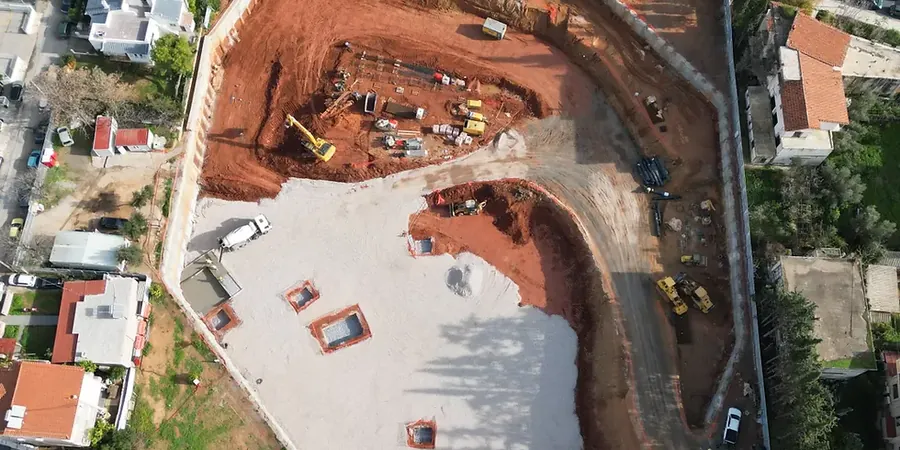
Local geotechnical conditions in Visalia
The soil profile on the east side of town near the St. Johns River floodplain behaves nothing like the ground up on the higher terraces west of Mooney Boulevard. East-side projects frequently hit saturated fine sands at depths where west-side excavations are still in stiff, overconsolidated clay — and that difference is exactly where excavation failures start. A contractor who assumes the whole city is the same can punch through a confining layer during dewatering and suddenly have sand boiling into the bottom of the cut. We model basal heave potential using the Terzaghi-Peck method, check for piping and blowout conditions under the hydraulic gradients expected during pumping, and specify filter gradations that won't clog in Visalia's iron-rich groundwater. The risk isn't just the hole collapsing — it's undermining the street, the adjacent foundation, or the utility corridor that wasn't mapped on any as-built drawing from the 1960s.
Our services
We structure our deep excavation design packages to move from investigation through construction support without gaps. Every deliverable is stamped by a California-licensed geotechnical engineer.
Shoring and Bracing Design
Full lateral support design including soldier pile walls, sheet pile cofferdams, and internal bracing layouts. We deliver deflection estimates, structural calcs for walers and struts, and staged excavation sequencing so your crew knows exactly when to install each brace level.
Dewatering and Seepage Control
Hydrogeologic analysis of the excavation zone, design of wellpoint or deep well dewatering systems, and specification of sump and filter arrangements. We calculate expected flow rates and drawdown radii to keep the working face stable and dry.
Construction Monitoring and Instrumentation Plans
Custom instrumentation layouts — inclinometers, piezometers, and survey points — to track wall movement and groundwater response during excavation. We set movement thresholds tied to trigger action levels so the team knows when to stop and reassess.
Top questions
How do Visalia's soil conditions affect deep excavation costs?
The layered alluvium and shallow groundwater table drive cost variability more than depth alone. If dewatering is needed for the full construction period and shoring must resist hydrostatic pressure, the engineering and construction scope increases. Typical design fees for a deep excavation project in Visalia range from US$1,800 for a straightforward single-family basement cut to around US$8,830 for a multi-level commercial excavation with anchored walls and active dewatering. The final number depends on the wall type, depth, proximity to adjacent structures, and how much site investigation data is already available.
What shoring methods work best in the Central Valley's alluvial soils?
Soldier pile and lagging walls perform well in Visalia's stiff upper clays and can be installed quickly. Where groundwater is persistent or the excavation cuts through loose sand layers, secant pile walls or sheet pile cofferdams deliver better water cutoff. Tied-back systems are common on deeper commercial excavations because they eliminate internal bracing obstructions, but anchor capacity in saturated alluvium must be verified with on-site load tests — we don't rely on empirical correlations alone.
Do I need a dewatering plan for a deep excavation in Visalia?
Almost certainly. Groundwater across much of Visalia sits within 20 feet of the surface, and seasonal recharge from irrigation and the Kings River can raise it further. Even if the excavation bottom is technically above the static water table, perched water in sand lenses can destabilize the face. We design dewatering systems sized for the actual hydraulic conductivity measured on your site, not assumed from regional maps, and we factor in the radius of influence so you know if neighboring wells or foundations could be affected.
How close to the property line can you excavate safely?
We routinely design excavations within three to five feet of property lines, which is common in Visalia's downtown and midtown commercial corridors. The key is selecting a wall system stiff enough to limit lateral movement and underpinning or improving the adjacent ground if necessary. We use finite element modeling when the adjacent structure is sensitive — old unreinforced masonry buildings from the 1920s are still standing on Main Street, and they don't tolerate much differential settlement before cracking appears.